Parasitic diseases
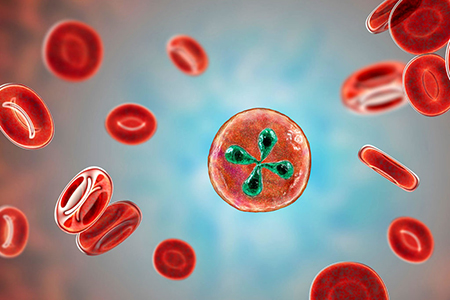
Babesia is a tiny parasite that infects your red blood cells. Babesia infection is called babesiosis. Parasitic infections are usually transmitted through tick bites. Babesiosis often occurs at the same time as Lyme disease. Ticks that carry Lyme bacteria can also be infected with Babesia parasites. In this article from Bitote, we introduce you to this disease.What is Babesiosis?
Babesiosis is a disease caused by microscopic parasites that infect red blood cells. Many different species (species) of the parasite Babzia have been found in animals, only a few of which have been found in humans. Babesia microti, which commonly infects white-footed mice and other small mammals, is the main species found in humans in the United States. Occasional cases caused by other species of Babesia have been identified.
Symptoms and complications of babesiosis
The severity of the symptoms of babesiosis can be different. You may have no symptoms at all or mild flu-like symptoms. Some cases can cause serious and life-threatening complications.
Babesia infection often begins with high fever, chills, muscle or joint pain, and fatigue. Less common symptoms include:
- severe headache
- stomach ache
- nausea
- Skin bruising
- Yellowing of your skin and eyes
- Mood changes
As the infection progresses, chest or pelvic pain, shortness of breath, and drenching sweat may develop. It is possible to be infected with Babesia and have no symptoms. Recurrent high fever is sometimes a sign of undiagnosed babesiosis.
Complications can include the following:
- Very low blood pressure
- Liver problems
- Breakdown of red blood cells, which is known as hemolytic anemia.
- Kidney failure
- Heart failure
Complications of babesiosis
Causes of Babbiosis
Babesiosis is caused by infection with a malaria-like parasite of the genus Babesia. Babzia parasite can also be called Nutalia. This parasite grows and multiplies inside the red blood cells of an infected person or animal and often causes severe pain due to the rupture of red blood cells.
There are more than 100 species of Babesia parasites. According to the Centers for Disease Control and Prevention (CDC), in the United States, Babesia microti is the most common strain to infect humans. Other strains can infect:
- cow
- Horses
- Sheep
- pigs
- Goats
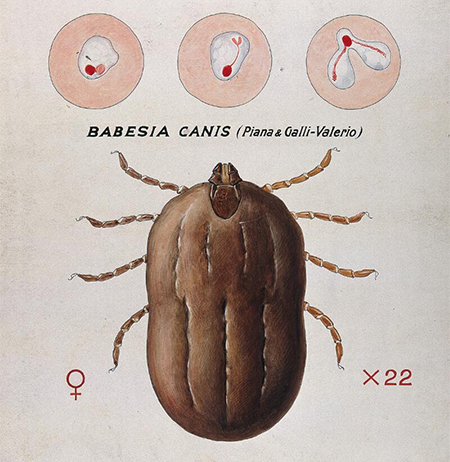
- dogs
How to transmit Babbiosis disease
The most common way to contract Babesia is through the bite of an infected tick.
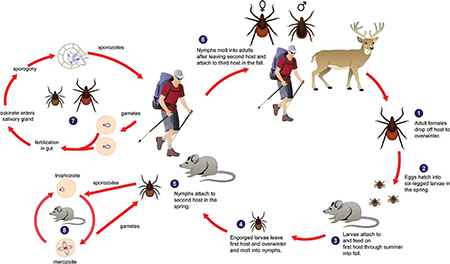
The parasite Babesia microti lives in the intestine of the black-legged or deer tick (Ixodes scapularis). The tick attaches to the body of white-footed mice and other small mammals and transfers the parasite to the rodent's blood. After the tick has fed on the animal's blood, it falls and waits for another animal to catch it.
White-tailed deer are a common carrier of deer ticks. The deer itself is not infected.
After falling from the deer, the tick usually lands on a blade of grass, a low branch, or leaf litter. If you touch it, it can stick to your shoes, socks, or other clothing. The mite then moves upwards and returns looking for a shell.
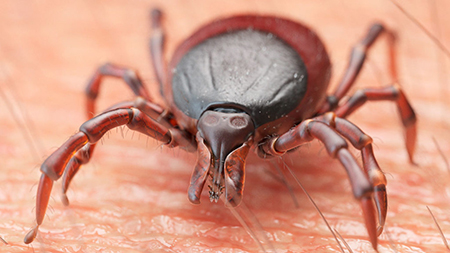
You probably won't feel a tick bite and you might not even see it. This is because most human infections are spread by ticks in the nymph stage during spring and summer. At this stage, the ticks are the size and color of poppy seeds.
In addition to tick bites, this infection can also be transmitted to the fetus through infected blood transfusion or through transmission from an infected pregnant woman. Rarely, it can also be transmitted through organ transplantation.
How to transmit Babbiosis disease
Babbiosis risk factors
People who do not have a spleen or have a weak immune system are at greater risk. Babesiosis can be a life-threatening condition for these people. Older people, especially those with other health problems, are also at greater risk.
The relationship between babesiosis and Lyme disease
The same tick that carries the Babesia parasite can carry the cork-shaped bacteria responsible for Lyme disease.
One study showed that up to a fifth of people with Lyme were also infected with Babesia. The researchers also found that babesiosis is often underdiagnosed.
Babbiosis symptoms are similar to Lyme disease symptoms. Co-infection with Lyme and Babesia can make both symptoms more severe.
How to diagnose Babesiosis
Diagnosing babesiosis can be difficult.
In the early stages, Babesia parasites can be diagnosed by examining a blood sample under a microscope. Microscopic diagnosis requires considerable time and expertise. If there is a very low level of parasitemia in the blood, the answer can be negative, especially early in the disease, and may need to be repeated in a few days.
If you or your doctor suspects babesiosis, your doctor can run additional tests. They may order an indirect fluorescent antibody (IFA) test on the blood sample. Molecular diagnostics such as polymerase chain reaction (PCR) may also be used on the blood sample.
Diagnosis of Babesiosis
Treatment of Babesiosis
Babesia is a parasite and does not respond to antibiotics alone. Treatment requires antiparasitic drugs such as malaria drugs. Atovaquone is used in combination with azithromycin to treat most mild to moderate cases and is usually taken for 7 to 10 days. An alternative regimen is clindamycin plus quinine.
Treatment of severe disease usually includes intravenous azithromycin with oral atovaquone or clindamycin given intravenously with oral quinine. In case of severe illness, additional supportive measures such as blood transfusions may be administered.
Recurrence of the disease may occur after treatment. If symptoms recur, they should be re-treated. Some people, such as those with weakened immune systems, may need longer treatment initially to clear up the infection.
Prevention of Babesiosis
Avoiding contact with ticks is the best way to prevent Babbiosis and Lyme disease. If you go to forest and grassland areas where deer are present, take preventive measures:
- Wear permethrin clothes.
- Spray repellent containing DEET on shoes, socks and areas at risk.
- Wear long pants and long-sleeved shirts. Tuck your pant legs into your socks to prevent ticks from getting into your clothes.
- Check your whole body after spending time outdoors. Ask a friend to look at the back of your back and the back of your legs, especially the back of your knees.
- Take a shower and use a long-handled brush on the areas you can't see.
A tick must attach to your skin before it can transmit disease. It usually takes a few hours after the tick comes into contact with your skin or clothing to stick. Even if the tick is attached, it still has some time left before it can transmit the parasite to you. You may have 36 to 48 hours. This gives you time to look for the tick and remove it.
However, it is best to be cautious and check for ticks immediately after entering.
Comments
Post a Comment